Everyone's going so fast that they keep hitting walls. Review, CI, product asking for things, whatever.
Why have we not seen an improvements in products?
While every post and thread feels like a 90's wall street office, the new android and iphone ship with fewer features than usual. No indie guys come up with a linux-sized alternative OS. Switch 2 remains unhacked. Windows takes 3 seconds to show the right click menu.
Is everyone just running full speed in circles or something?
A good chunk of what my company has been doing with AI falls into either burning down our known tech-debt and "easy wins" that no one ever had the bandwidth to approach... And improving / automating our processes. The former is having a direct and meaningful impact on the quality and availability of our services.
Our QA, formerly a fairly frequent blocker of all our releases, are doing more in-depth reviews and catching issues earlier in our release process. They have become unblocked to the point they are actively chasing down work that starts to slip.
We have cleaned up and tuned both our security alerts and operations logs and improved our tenant isolation in our service in a way that makes customer and formal audits SIGNIFICANTLY easier.
We're setting ourselves up for faster human development of the hard-things. Our development environment and infrastructure are faster, cleaner, more auditable processes, and cheaper overall to operate.
These fixes mostly don't show up in our product change logs, and definitely don't fall into "new features". It would largely be invisible to the outside world, but our costs are going down (though to be fair, not offsetting the spend on AI to date), internal productivity has improved, operational incidents are down, and customer satisfaction is up.
Cost is stable (or rising?), user-facing delivery is sameish, (some) engineers seem happier because they are allowed to gold-plate and prepare for future “human development of the hard-things”.
Engineers are happier because they can spend more time on that extra round of polish that was just filed into low-priority "fix when time" Linear tickets.
QA is happier because the stupid bulk operations are handled with AI and they can focus on the hard to find stuff that tickles the QA mind in a special way =)
Same stuff, but with better (in-house) tooling and (most) people are happier. The Code Artesans aren't, but it's mostly their problem and they'll find companies that only do fully manual programming for specific niches.
Internal costs are rising directly due to AI spend, we're still figuring out cost control and budgeting around this but are expecting this to basically become a new per-employee cost to factor in.
I would say internal morale and productivity has improved. We have explicit policy guidance and a general collective distaste of pasting AI responses which is what usually sours me on interactions with people that are fully gargling the kool-aid. My CI experience has gone down from ~1.5 hours to less than five minutes and I can actually run our entire platform locally on my laptop again. My personal experience has improved at least.
Externally, you're probably right that we're not really capturing user sentiment well about how our company's changes are impacting them. I can concretely say that there were several customers that were disappointed that our public change log notes have been about the same length. They were expecting us to go through our feature backlog faster because we we're starting to use AI.
On the other hand, we have had fewer outages, reached our fifth 9 consistently over the past four months which is a new company record in the 11 years its been tracked. We have had fewer support tickets, our customer retention rate is the highest it has ever been in the company's history, and we're growing our internal teams. Based on the evidence I have available to me, I would say that we're healthier than before both from a user sentiment perspective and an internal morale perspective.
>If you are product-driven, life is pretty good, and maybe has never been better
It has certainly been better for junior devs, mid devs, anyone looking for zirp era salary growth and supply demand ratios. For a senior code-adverse coaster looking forward to see his static salary get eaten by inflation, life has indeed never been better.
Yeah, at Corp, that makes sense. I was thinking more along the lines of scrappy startup silliness. "I am one person and I deal with any and all code to get my product built."
From that POV, has it ever been better, assuming you can rise to the top of an ever more crowded market?
> "I am one person and I deal with code to get my product my built."
From that POV, has it ever been better, assuming you can rise to the top of an ever more crowded market?
Building a product is easier now, same way making a photograph is easier now. Making a reliable and high income living out of it though, it looks increasingly uncertain.
In a world with abundant music and photography, just saying that you made your music using Reason/ProTools or you made your photograph with a Leica isn't enough. I believe the same will happen with software. Sales, product design, customer service and operational aspects like uptime will matter more than the software itself. Ironically, this is the kind of stuff the HN type highly dislikes.
> I believe the same will happen with software. Sales, product design, customer service and operational aspects like uptime will matter more than the software itself. Ironically, this is the kind of stuff the HN type highly dislikes.
Agreed. It's not even a new thing. They tried to teach me/us long ago, starting by putting it into words we might more easily understand, such as "Customer Development" lol.
When I realized that it was the sales guys that will have the power in the mid-term new world, I got genuinely upset. However, maybe they always had the power and I just didn't want to accept reality.
Now, I believe the most desired hire in the near future will be the PMM.
> A Product Marketing Manager (PMM) in tech is a strategic bridge between the product, sales, and marketing teams who defines who a product is for and why it matters.
A PMM with a tech background must be worth their weight in unobtainium at this point.
If you are product-driven why not go into Product Ownership roles? It certainly will be more satisfying compared to prompt "engineering" clerk "career".
Well, my life is currently both, as I am on the smallest possible tech and product team. To me, extrapolating on having done this since Sonnet 3.5 to now, there will be no tech aspect to the job soon enough. There are many hundreds of billions invested in making that a reality, and they are succeeding.
Until ~9 months ago, I spent most of my time being a "prompt engineer." Today I join a meeting, ten minutes later I receive the transcript. Then, I run a custom skill in my project, and I get Jira epics and stories to triage that are nearly perfect. Then, I run the second skill orchestration skill... some babysitting... and ~85% of the time that is all I need to do. Docs, code, unit and e2e, great UX... all there after every meeting, and basically two commands on my part.
I see two to three to maybe five years before anything I have to offer, in any capacity, is completely cut out of the picture.
I honestly don't understand how everyone is not on this same page. The labs are going to eat it all. The only reason I see for them to talk about "pausing," is because they finally realized that they are going to collapse the entire service economy around themselves at this rate: aka, the USA.
Yeah it’s going to be very rough for any knowledge worker unless the governments decide it isn’t ok for the general public to be allowed to use the tech.
It’s actually rough today with astra and fable, it’s just not been diffused enough. Tech workers like us see the writing on the wall, but a lot of others are blissfully ignorant.
It’s 10 devs with a small ai budget each vs 1 ex-dev now PM with a large ai budget - the choice is quite obvious for any decision maker who counts time and money
But assuming that one ex-dev with a large AI budget is highly profitable, why wouldn’t you convert the other 9 and give large ai budgets as well?
I guess if the company has no opportunities for growth so they only need exactly as much output as one team? But that sounds like a company that’s doomed anyway, regardless of ai.
You need to grow customers or contracts by 10x to fill the new pipeline and that's an impedance mismatch. Easier to let 9 go and hire later, especially since everyone else will be doing the same thing and there'll be a rather large pool of talent.
How you identify talent in this new world is a different kind of a problem which I don't think people figured out still and won't for quite a while.
If an org suddenly has 10x the production capacity for the same price and can’t figure out how to sell it profitably, it is mismanaged and will die. That’s very much the case for a lot of businesses for sure, but there have been filters before (the internet, for instance) and we survived.
I honestly don’t understand comments like this because in my work, this would be a disaster. And before I get the comments about my harness/skills etc, I’ve tried many tools and harnesses and skills and all that earnestly and in good faith. I find use in it for doing the grunt typing labor, but letting it loose in ways described above have only ended in spending much more time cleaning it up than if I just did the work myself.
I hate to sound pretentious, but I wonder if it’s a difference in complexity of work and problems being solved.
PS5 emulation has gone from barely working to running Dark Souls at 10+ FPS with virtually no graphical glitches… in 6 weeks. If you’re not familiar with normal emulator development time, this is… quite extraordinary. There have been insane progress on decompilations and many other things in the emulator space.
Everyone’s trying to figure out how to convert this speed to product features at scale, but enterprises are like container ships. Lots of might but slow to turn. The littler companies can actually take advantage of this and produce higher quality products at much faster speed. I think you’re expecting too much in the short term and too little in the long term. AI-native companies are gonna eat everyone’s lunch, once they figure out how to actually do it reliably.
Also, in 12 months, we went from seeing game dissassembly and decompilations projects be slow and annoying, to suddenly having enough mapower where people are taking the liberty to CHOOSE which decompilations to support. DK64's release was 80% anti-AI marketing, not because they were strictly anti-AI, but because they were telling the OTHER decompilation to fuck off and learn some goddamned standards. Completely unthinkable before.
There was a video by a layperson 2 years ago where they wanted to know the mechanics of some elusive pokemon pinball spawns where there was a whole bunch of missinformation about it online. The people behind that project had the correct addresses but they were completely unlabeled and the layman had to essentially figure out and do some of the work themselves to sort it out and figure it out. Nowadays that would never happen. An LLM will just do it for you within the day.
The fact that this is an account with a username specifically focused on this specific concern that was created 5 hours ago is real weird/suspicious.
Also, are these even actual decompiles? Sure, playing Wheel of Fortune with a LLM model that at some undetermined point spits out what seems to be a working example is sorta useful, but also…how exactly do you debug this nonsense? Don’t tell me we’ll just have the LLM thrash around a bunch again. What I’m asking is does anyone understand what is going on here other than “lol, it works, shut up”?
You must be new here. Lurkers posting under an apt username then disappearing is a feature, not a bug. He doesn't need to argue with anyone online - he said his piece and we're free to take it or leave it.
Usually, green username are a sign of "leave it", I'll agree. But this one seems very informative.
LLMs work great at decompilation, I'm not sure what you are trying to suggest. Outside of game compilation disassembly is useful for debugging various crashes in 3p code where you don't have the source. And yes LLMs do the debugging here.
I’m suggesting that having a model wander around stochastically is not necessarily a great way to gain any insight or understanding. LLMs do not think, they cannot really debug anything. Attaching intelligence or intent to them is a non sequitur, it’s not happening. A cloud that looks like a toaster does not imply anything beyond the human obsession with pattern matching, why do we keep doing this with LLMs? They can randomly wander around and sometimes produce useful output.
I don’t doubt they help by randomly permuting around in a way that people cannot do at scale, but I question the economics of this approach and I think it needs to be used judiciously. Sometimes you just have to do that especially like you said, when you do not have the source or the code is intentionally obfuscated, this can be useful, but a lot of people seem like they’re just vibe coding crap and blowing money on tokens until they get a useful result and I have no idea what the value of that is.
I mean, do you understand the systems you work on? Down to the ISA? The transistors? The electrons?
The stack gets taller and more complex, as it ever as. People who understand one part of the stack in great depth rarely understand the entire stack. Those who understand its full shape don’t have complete depth at any one part. This is how computing has worked for a few decades at least.
You don’t have to shut up, you’re free to dive in and learn. But you’ll have to balance breadth and depth like the rest of us.
I think most people with even a bachelor's in anything STEM know it down to the transistors. That's also been true for decades. Every time I hear this line of argument I cringe. Computers aren't that deep compared to other engineering topics.
> Every time I hear this line of argument I cringe.
Because it’s the same kind of fatuous logic that intelligent design proponents use. This thing is so complex so we can’t possible understand it. Therefore, it’s magic.
People specialize for sure, but it’s not like the average person can’t figure this stuff out with some motivation.
Before you get to transistors you need to understand memory types (heap, stack, etc). You need virtualization, interrupts, and threading. You need CPU vs GPU, character encoding, and memory mapping. At least ipv4 and layers 1-3 of OSI. And much more.
Do you really think anyone with a bachelors in STEM has all that, or are you saying full stack knowledge is satisfied by knowing a high level language plus the fact that transistors switch passing or blocking current based on a signal?
> AI-native companies are gonna eat everyone’s lunch, once they figure out how to actually do it reliably.
Couldn't you say this about any company? What isn't just a matter of "figuring it out"?
Why can't they use AI to crack this nut? :D
> If you’re not familiar with normal emulator development time...
Emulators have historically been a shitshow until someone figures out missing pieces here and there. By their nature, that tide lifts all ships. It has very little to do with using AI. I'd argue the real reason emulators aren't what they used to be is the hardware is more complex now and the scene is no longer attracting the most talented devs. Video games used to be on the cutting edge and carried a lot more cultural weight. It's pretty underwhelming to get cred for working on lame x86 hardware that plays yet another franchise reboot.
I did the same thing with a old multiplayer game called Wulfram, we got it online and a mostly working server (most of the game logic was server side with no surviving code or binary) with the help of AI, Mostly opus and astra. https://wulfram3.com is our efforts in this.
Last year people were asking "if AI is so great then where are the new apps?". Then data for 2026 came out and now the IOS app store has a 84% percent year-over-year increase in new app submissions.
For that other stuff you mentioned like the right click menu. Those huge corporate projects suffer more from layers of institutional dysfunction and will be very very slow to show any improvement. Their dysfunction can't be solved with just faster coding.
Using AI to build more features is easier than using AI to improve existing projects. People will gradually figure out how to do latter too, it'll just take longer.
That's just volume though. I also know, and have no trouble believing, that github is going down partly due to the weight of all the vibecoded pushes. But that does not necessarily translate to people's needs and wants being covered, for all we know iOS just has a plague of unused POCs.
Do you have actual productive examples? As in, products with a real userbase that couldn't exist or be scaled pre-AI? Genuinely asking, I might have missed some large hits. The closest I can remember was bun rewrite kerfuffle, which seemed more a marketing action than anything.
If we sorted through all those new apps and ignored all the crap, I'm pretty sure we would find an overall increase in actually useful apps. I just shipped a new app myself, and I think it's useful, and I wouldn't have finished mine without AI assistance.
> products with a real userbase that couldn't exist or be scaled pre-AI?
Coding hasn't been the bottleneck for product creation for a while. So I don't think there are going to be many examples that fit that exact criteria. Any app idea was 'possible' before, it just took more developer hours to do it. So now teams are doing more things that were weren't worth the effort before, but are a lot more feasible with AI assistance.
> If we sorted through all those new apps and ignored all the crap, I'm pretty sure we would find an overall increase in actually useful apps. I just shipped a new app myself, and I think it's useful, and I wouldn't have finished mine without AI assistance.
App store revenue actually decreased! That suggests that the apps are largely not useful, unless you make the implausible assumption that nearly none of them are charging money.
If they were actually useful though, demand shouldn’t stay the same — more niches should be getting filled. If they’re just clones of each other, then yes
It’s interesting that people claimed the exact same thing when computers were being introduced to the work place int the 80s and 90s. Lots of papers showing how productivity didn’t go up at all and using a paper and pen seems to be just as efficient as using a PC.
Even in the 19th century, when electricity became widely available, there was no productivity gain for 30 years at least. This is a well understood phenomenon.
Ah you must be referring to this off the cuff comment by Robert Solow in a book review: "You can see the computer age everywhere but in the productivity statistics" (1987)
It's an interesting question and very much not resolved. It indeed led to a flurry of studies in the 1990s, and more recently to several updates and meta-analyses.
The problem of "does computer technology investment causes increased productivity" is an interesting issue in economics and statistics. It is far from clear that the (immense) investment in computers over the past several decades has caused a corresponding excess growth in productivity.
Some of the literature published after 2015 that I have read on this topic:
"Information technology (IT) productivity paradox in the 21st century"
> Thus we are still unable to confirm or reject the existence of an IT
productivity paradox
"Benchmarking the IT productivity paradox: Recent evidence from the manufacturing sector"
(This one was published in 2006 but I find it relevant because it does a very well scoped analysis in manufacturing firms thus addressing the oft-mentioned argument that computer technology may leverage task productivity in a way that is hard to measure in aggregate)
> However, many scholars from both sides of the IT paradox debate agree that difficulty still exists in specifying how to assess the IT contribution, and the availability of reliable data sets
> Regardless of the final decision to differentiate or conform, our results make a compelling argument that more spending does not necessarily mean better IT productivity.
"Lessons from three decades of IT productivity research: towards a better understanding of IT‑induced productivity effects"
(This is one of the most inclined to disagree with the existence of the paradox, and still very cautious in the language used for writing the conclusion, e.g.:)
> But to not at least consider the ongoing technological change as an important determinant of the deceleration in productivity growth seems ill-advised."
(This I'm quoting from the submitted manuscript. I haven't gotten around to reading the published version yet, but:)
> Since the size of the effect helps make the right decision in business-related investments, our result of ICT elasticity being very close to zero with values, about 0.3% for productivity and no effect on profitability, supports the argument that there are better forms of investment to be made
This is just ~2 - 4 years after ChatGPT launched, and despite very shallow adoption (only ~6% of all work hours.) As a sibling comment indicates, it took almost 2 decades for the Computer Revolution to be visible in national level statistics.
Also note this study was originally published in 2024, then revised in 2025, but this preliminary evidence has been around for a while, if people wanted to find it. It's even been posted to HN a couple of times, somehow it just doesn't get the attention you'd think it should get, even if it was just to poke holes in the conclusions.
> Since the release of ChatGPT in late 2022, artificial intelligence (AI) has been widely expected to raise productivity. But aggregate productivity data have so far offered a more muted signal: Utilization-adjusted total factor productivity grew only 0.07% over the four quarters ending with the first quarter of 2026
> When we feed these estimates into a standard aggregate production model, this suggests that generative AI may have increased labor productivity by up to 1.3% since the introduction of ChatGPT. This is consistent with recent estimates of aggregate labor productivity in the U.S. nonfarm business sector. For example, productivity increased at an average rate of 1.43% per year from 2015-2019, before the COVID-19 pandemic. By contrast, from the fourth quarter of 2022 through the second quarter of 2025, aggregate labor productivity increased by 2.16% on an annualized basis. Relative to its prepandemic trend, this corresponds to excess cumulative productivity growth of 1.89 percentage points since ChatGPT was publicly released
These long term data suggest that this "excess" remains bellow historical productivity growth
The analysis bellow, more recent than the one you pointed to, is from May 2026, and an even stronger argument to support your position on the side of "computer technology investment caused a delayed excess growth in productivity". And as you can see at the end of my comment, they still write a very tentative conclusion.
To be clear: I do not take a position. I think this is an open question, a very important one, and I am not fully convinced that the exponential growth in the investment on computer technology over the past 50 years has led to a corresponding gain in productivity, nor that it is entirely a drag and a mechanism for increasing firm size and driving asymmetric profitability concentrated in ever fewer firms as the increased concentration in the capitalization of American stock market index composition would indicate.
That said, the strongest case I have seen for the position that we are beginning to see these delayed gains is the letter I linked above, and it still takes care to conclude:
> As more data become available, it will be important to continue to monitor whether current patterns represent the early stages of a new era of booming productivity or merely a temporary uptick in an otherwise slow-growth environment.
> These long term data suggest that this "excess" remains bellow historical productivity growth.
That's partly because we are discussing productivity growth. Today's productivity growth is on top of the substantial productivity improvements that have been compounding due to past booms like the Computer and Internet one. So in relative terms the growth looks modest, but in absolute terms this is substantial.
Also that BLS chart is a bit unhelpful because it shows time periods covering multiple years and does not isolate the years after ChatGPT launched, which is what the St. Lous Fed looks at and finds interesting indications. Like currently productivity growth is 1.3 percentage points above what was forecasted just before ChatGPT was released. This discrepancy is not fully explained by other factors and lines up with other data sources related to the effects of AI.
The letter you linked is relevant, but it is trying to make a much broader point than I am. Note that:
1) it's asking whether we have entered a "high-growth regime" meaning a period of sustained productivity growth, and itself points out that it necessarily requires years to play out; and
2) its point of reference is the 90s when the computer revolution had truly kicked in after almost two decades of adoption starting in the mid/late-80's, during which any impact was famously hard to find: https://en.wikipedia.org/wiki/Productivity_paradox
So what is astounding is that the effects of the AI revolution may be visible in national-level economics data after only 2 - 4 years since the technology was introduced, and we're already wondering if we have shifted into a "high productivity growth era"!
I'm sorry I don't understand what you mean when you discriminate productivity growth from productivity improvement.
> So what is astounding is that the effects of the AI revolution may be visible in national-level economics data after only 2 - 4 years since the technology was introduced, and we're already wondering if we have shifted into a "high productivity growth era"!
I feel compelled to repeat the conclusion from the letter I linked. I used it as an example of how much of an open contention the productivity-from-computer-technology issue remains
> As more data become available, it will be important to continue to monitor whether current patterns represent the early stages of a new era of booming productivity or merely a temporary uptick in an otherwise slow-growth environment.
I wasn't trying to differentiate between growth and improvement, I meant to use them interchangeably, apologies for the confusion. What I meant is the relative amounts in the BLS chart are prone to being misinterpreted because that growth is compounding and the time periods depicted don't correspond to the time period we are interested in.
I realize the findings from these studies are tentative; in such a short timeframe such conclusions have to be. But I don't really see much open contention regarding the key question here, which I think is "Has AI had an impact on national level labor statistics?"
E.g. the conclusion you quoted simply says that it is not clear if this is a temporary uptick or a sustained boom. But it agrees that there has been a significant positive impact on labor productivity already, even if the impact on TFP is more modest. Which is what the St. Louis study looking at survey data, and corroborated by various other data sources, finds too.
If the question is whether this is a sustained "productivity boom", I agree that we don't know that yet. But if the question is whether there has been any productivity impact at all, I would say there are multiple indications of that.
You are focusing too much on an informal letter. There are lots - I am talking dozens - of peer-reviewed papers discussing the so-called "productivity paradox"
There is a lot more to this discussion than one time series from the BLS, I have linked just 4 that are worth skimming elsewhere in this thread.
I am not trying to prove a point one way or the other. The topic interests me and there is a lot of analysis available on the problem of finding the productivity growth in economic data corresponding to the ever increasing investment in computer technology.
To me it is clear that it is an open problem, and the literature available is a great reflection on statistical methodology in economics.
> But if the question is whether there has been any productivity impact at all, I would say there are multiple indications of that.
That is indeed the question, and I have not found one paper that conclusively states that there is clear evidence or clear absence of a measured statistical effect.
Once the previous goalpost gets demolished on HN, there's always someone new to put a new one. We aren't quite there yet but eventually the goalpost moves to something that is just impossible to even measure. That'll be the end game surely
1. the metrics you mention are hard to measure and usually lag
2. the metrics might not be moving yet, because AI accelerates everything a little bit, and most of the hype is still the promise rather than the actuality
3. people are using the gained productivity to speed up secondary tasks / do different work, because applying it to their main work is still complex or not of sufficient quality
Considering the amount of literature I have found and read on this topic so far, covering 30 years of analysis specifically in the context of productivity driven by investments in computer technology, and using data covering 130 years of economical statistics, its methodology and limitations, I am deeply skeptical of any 3 point dismissal of this problem as being easy to explain away such as your own.
I said elsewhere, I don't have any beliefs about this problem, I am deeply fascinated by the difficulty involved in productivity analyses and especially by the question of missing productivity that we should expect to be driven by the huge investments in computer technology that have been observed over the past half century - and quickly accelerating of late.
It's a fascinating topic and I intended merely to point out that quantifying computer technology driven productivity growth is a hard problem. Any facile conclusions one way or the other are suspicious in my view.
It is not clear to me at all that building and buying more computer and data centers and software is an obviously good investment that should only be increased because it raises productivity. That is the discourse, but there is a very conspicuous lack of hard data to support that claim, and lots of pages going back and forth and proclaiming at the 'conclusions' sessions of papers and chapters that the problem is indeed hard and the work done so far is at best inconclusive.
more code faster is competing against some of the largest tax hikes of the last ~70 years, economic uncertainty on what the taxes tomorrow will look like, combined with an energy crisis.
Are you claiming productivity should be growing much more slowly then it is over the past few months or years? Can you show me any analysis that supports that claim?
Because I have seen plenty of analysis published in the past 30 years that puzzle over the productivity growth stagnation in the face of an exponential growth in capital expenditure in computer technology.
So by all means share with me some of the groundbreaking results showing that we can finally see more productivity growth than would be otherwise expected by the conjecture.
There's a difference between task-level productivity, which AI has been shown to increase, and effects on the macro. You're talking about the latter while most people here are engineers considering the former.
It's still unclear if task-level productivity gains bubble up, but it's also still early and I'm not sure we should expect to see immediate results there.
> I'm pretty sure we would find an overall increase in actually useful apps
I think you're probably right but at what point does it become diminishing returns? I have observed the app market to be overly saturated for years and rarely download something other than a mobile-banking update.
It became diminishing returns years ago, long before AI.
But absent a central planner for all human endeavor, people are free to see if their particular brilliant idea will be the one in a million that gets traction.
> If we sorted through all those new apps and ignored all the crap, I'm pretty sure we would find an overall increase in actually useful apps. I just shipped a new app myself, and I think it's useful, and I wouldn't have finished mine without AI assistance.
I don’t think this is happening, at least not on any scale that makes any of this actually useful. One off success stories do not make a revolution.
It absolutely has generated a massive amount of slop, though. The problem is that you still need intent and while I think LLMs can help you free up and push through annoying boilerplate or tedious spots where known solutions exist, you still need to design these things and that’s something I’ve not seen an LLM be too helpful with.
What you're saying wouldn't be hard to prove, you're acting as if we aren't aware of usage statistics. We can even tell if MAU (monthly active users) are increasing or not for particular apps. So we are aware of them and what do they actually say?
In the gaming space, retro console PC ports have absolutely exploded in the last year. People are modding old games with 4k textures, ray tracing, DLSS 5, widescreen support, uncapped framerates, dual-screen (e.g. Ayn Thor), etc. PS5 emulation has gone from almost nothing to AAA titles in-game in like 2 months, and apparently now runs on xbox (lol).
The other day someone posted a reverse engineered GPU driver for their Mac[0].
Anyway, what makes you think those pushes aren't individuals meeting their own needs? I expect it will take a while for this to really sink in, but the future is people asking the computer to build exactly the app they want.
Also, English localizations of even super-obscure foreign retro games.
Most of those might be not as good as fan translations from dedicated people with good knowledge of English and the original language (especially for very context-dependent languages like Japanese) but they are definitely good enough to follow the story and play through the game.
whats the large hits that have happened in the past couple years?
I think ai has raised the floor quite heavily on what it takes to be a large hit.
all those vibecoded pushes are people building bits and bobs and variations on each other, instead of buying it or using a common service. If it could be done by ai, it will be written off as unimportant.
Has anyone said that AI is fixing user research, actual idea generation, marketing and audience reach? Or are you assuming that better code should be making all of that irrelevant?
It either delivers better outcomes or fails to do so for not being as general and useful as touted.
The original sales pitch from the major player in this technology hype cycle is "cure cancer, fix global warming, take over the economy". Not "more LOC".
Not OP, but I ported a legacy .NET WebForms application to Blazor. The actual code migration was completed over roughly a 48-hour period, followed by fairly extensive testing.
We were fortunate to already have a strong end-to-end test suite written in Python, so we could run the new application against the same tests and verify that the existing functionality was preserved. QA found around 20 bugs, which we fixed pretty quickly before launching.
After the migration, we also moved the application's authentication from Shibboleth to Entra OAuth and deployed it to our OpenShift infrastructure. We couldn't do that with the old WebForms application because our cluster doesn't have Windows worker nodes, so the legacy app had been stuck running on VMs. Getting it onto OpenShift gave us another operational and cost-saving benefit beyond simply modernizing the codebase.
I did this back in January, when the models finally became capable enough for this kind of work. I believe I used GPT-5.2 through Codex. Successfully completing this project is what finally got me fully on the AI bandwagon. I had used AI before, but mostly for smaller tasks like writing code, refactoring individual methods, or making isolated changes.
The application is now modernized, more stable, faster, and more functional than it was before.
I think the project worked as well as it did for two important reasons. First, I had deep domain expertise in both the application and its surrounding systems because I was the original developer. Second, our QA team's test suite was comprehensive enough to validate the functionality that actually mattered. AI dramatically accelerated the work, but there still needed to be someone who understood what the application was supposed to do and a reliable way to verify that the new implementation behaved correctly.
None of this means we couldn't have done the migration without AI. We absolutely could have. The difference is that AI made it possible to do it at practically zero cost in terms of engineering time and money compared with the alternatives.
We had wanted to move away from WebForms for years, but with the size of our team and the constant stream of new feature requests, there was never a realistic opportunity to stop development for months and focus on a rewrite. I estimate that doing the migration myself without AI would have taken at least six months to do properly. The other option would have been hiring a contractor, which I would estimate at $80,000 or more over six to nine months.
Based on my token usage, those roughly 48 hours of working with Codex to port the application cost about $150. Those were January prices, so I don't know what the equivalent cost would be today.
For me, that was the project that changed AI from something useful for assisting with individual coding tasks into something I saw as capable of fundamentally changing the economics of software engineering work.
I'm running several. They're not "large hits" but they're providing value to thousands of people. They couldn't exist pre-AI because core functionality depends on LLMs.
What you're missing is that slop has increased 20x but quality new releases have also increased 5x. Unless there's something in your niche though you'll mostly see the 80% slop so I get why you feel that way
I have this theory that the economics of AI development would make it so it's much more viable to make in-house, custom, apps rather than paying subscriptions for apps. I have even seen this play out on a personal level. A friend of mine who has no dev experience vibe-coded something custom that evite does. So it's possible measuring the number of apps miscounts ones that are not public or shared. I'm not negating anything you said, just adding something about metrics on apps.
At the 60 person smb (travel industry) I work we've taken web development in house for the first time, created new user experiences that sat on our roadmap for years, created custom AI solutions on top of our Fresh desk tooling, and (predictably) created a number of internal productivity tools.
The actual bottom line result is very fuzzy. Cost are shifting, by spending less on agencies but in return opening up new positions or shuffling people internally.
We don't see a clear increase in revenue, nor can we accurately tie retaining revenue to our AI initiatives.
Workplace satisfaction scores remain similar, with a few outliers (e.g. some people's work got incredibly exciting, while a few others are terrified by all the change).
Time will tell if this all leads to anything meaningful for the business.
i used to be in charge of these sorts of decisions for my team. the thing most people don't think about when it comes to rolling your own software is the upkeep. in other words, you don't _just_ pay for the software. you pay for someone to keep it running so you don't have to wake up at 2am to deal with angry customers.
Maybe one day but right now in order to get any meaningfully usable app with AIs you need to pay way more in AI sub than monthly sub of a bunch of apps. It doesn’t make sense right now to build especially your own if you’re not a company. Also it’s not clear how long we’ll have this heavily subsidized subscriptions.
This I can believe, also seen it on a personal level.
But I'm not sure about the long-term effects of this, we just shifted the "subscriptions for apps" to "subscription for an app" AND you must now maintain said apps.
We know it's easy to produce working code now, what's missing is useful software that actually solves a problem. What problem does that toy OS solve? The main point of toy OSes has been education, but you learn nothing when using an LLM. So all of this is just pointless energy consumption, it's not solving any real problems that people have.
Last time I looked the other app stores didn’t show anywhere near that much of a bump (that was a several months ago though).
And a few months ago I went through a random sample of new apps on the App Store and the vast majority were just wrappers for AI APIs. So it was more of a new gold rush situation than a productivity bump.
> Last year people were asking "if AI is so great then where are the new apps?". Then data for 2026 came out and now the IOS app store has a 84% percent year-over-year increase in new app submissions.
That's exactly the opposite of what I want to see. As an app store user, I want to see fewer, higher quality apps, not more shovelware or slop.
>Last year people were asking "if AI is so great then where are the new apps?". Then data for 2026 came out and now the IOS app store has a 84% percent year-over-year increase in new app submissions.
People mean where are the good new apps AI made possible. Of course it has a 84% year-over-year slop app submission.
If the cost to produce goes down, unless the demand is elastic, you'd expect fewer big hits in favour of a more fragmented, more competitive space all earning less.
Probably for the same reason that SV companies hiring thousands of developers struggled to improve their product much past the original product, that was built by a handful of people.
Scale in headcount was a tactic to get investment, then you had to find stuff for everyone to work on. Suddenly people have the time to engineer so hard that we get runtime JSON defined CSS rendering engines to produce the same buttons we've had since 1995, instead of just writing a stylesheet and html.
Code output velocity from AI threatens to be useful, except it's also prone to over-engineering and burning tokens on the unnecessary. It's learned from the best after all. My suspicion is there is a lot getting done, but it's just not that impactful to flagship products.
As others have noted, there is a lot of new work going into passion projects that would have never happened otherwise, and that is cool. But I wouldn't hold my breath for SV tech to become super pragmatic and effective.
As usual, Brooks has 50 year old insights about this 'novel problem'
> Probably for the same reason that SV companies hiring thousands of developers struggled to improve their product much past the original product, that was built by a handful of people.
Brooks: "Adding manpower to a late software project makes it later."
> Scale in headcount was a tactic to get investment, then you had to find stuff for everyone to work on. Suddenly people have the time to engineer so hard that we get runtime JSON defined CSS rendering engines to produce the same buttons we've had since 1995, instead of just writing a stylesheet and html.
Brooks: "All repairs tend to destroy the structure, to increase the entropy and disorder of the system. Less and less effort is spent on fixing original design flaws; more and more is spent on fixing flaws introduced by earlier fixes. As time passes, the system becomes less and less well-ordered."
> Code output velocity from AI threatens to be useful, except it's also prone to over-engineering and burning tokens on the unnecessary. It's learned from the best after all. My suspicion is there is a lot getting done, but it's just not that impactful to flagship products.
Brooks: "C. S. Lewis has stated it more perceptively: 'That is the key to history. Terrific energy is expended—civilizations are built up—excellent institutions devised; but each time something goes wrong. Some fatal flaw always brings the selfish and cruel people to the top, and then it all slides back into misery and ruin. In fact, the machine conks. It seems to start up all right and runs a few yards, and then it breaks down.'"
That Santayana quote is a bit worn out but applies beautifully here. It's worth recovering its context:
Santayana (1954, p 82): "Progress, far from consisting in change, depends on retentiveness. When change is absolute there remains no being to improve and no direction is set for possible improvement: and when experience is not retained, as among savages, infancy is perpetual. Those who cannot remember the past are condemned to repeat it"
I'm grateful for your framing of the issue from Brooks's perspective. I've been noodling on Conway's law in this changing world.
> organizations which design systems are constrained to produce designs which are copies of the communication structures of these organizations.
With all business functions consulting the central hub of AI to carry out their work designing systems where the users consult that same hub, what system is left except for the central hub?
In that case, what happens to all of Brooks's wonderful insights on how we might work together when we are no longer working together?
Ah yes "How committees invent" is a great paper that I often think about.
The role of software in reproducing organizational designs is a fascinating topic. When organizations adopt ERP, or Office, or buy into the Salesforce ecosystem, or use Jira, they are also adopting organizational designs. I think this plays a similar role to consultancy. By adopting software, organizations are implicitly learning about common practices and internalizing industry knowledge.
As for the adoption of LLM-centered workflows, I suspect that the end goal is not having a great new product that does everything better as is often claimed. I think the end game is making organizations dependent on the vendor. That might backfire depending on how the ecosystem evolves in terms of subscriptions to "frontier" vs open-weight models running locally. I am watching keenly.
I think there is a lot to be said in expanding Conway's analysis, and there is a lot of literature on related topics using terms such as "socio-technical systems" and some other venues in organization science that have a similar approach by other names. I think Giddens' ideas on structuration in sociology could be of interest to you.
Anthropology, archaeology, and ancient history all have some great texts on the development of complexity over time, how it grows and how it collapses and why. In fact the first reference to Giddens' work I read in a fascinating little book about the development of complexity in Ancient Greece via practices of feasting, by Small. Also of course the work of Cline on the Late Bronze Age collapse, and Tainter on social complexity growth and collapse more generally, are fascinating.
I do tend to be fascinated by the study of the distant past but if you look up Giddens you can probably find books and adjacent writers that might help you reflect on Conway's article.
With pay-per-token, there’s also an incentive for over-engineered but functionally harmless architectures. A json based css engine is probably something that can be test-cased really well in the training set.
those thousands of developers aren't working on the FB feed or whatever...
they're working on the ad tech business and other business-related systems involved including internal tools.
and all the other platform engineering shit under the hood that makes much of the web scaleable... and lots of it is open source and contributed to by various engineers from these companies.
end of the day, these are businesses. they're not charities or whatever casual shit.
nobody is stopping you from building a competing product that's lean or whatever.
why don't you do something like that? i'm sure you're a genius.
No seriously, companies hired developers just to starve the competition of talent, raise more investment etc. It was a genuine thing, that left a lot of developers doing pretty meaningless work. A similar thing happens for managers in big orgs, who want bigger headcounts to inflate their power in the org. You get thumb twiddling and initiatives to justify the headcount.
It's probably changing now as VC cash floods into AI instead of web app startups, but I am not talking out of my ass, it's a well known phenomenon.
The industry does not incentivise or reward lean software, the software input for a lot of "software" companies doesn't require it, that's fine. Exactly as you said they're businesses, they do what makes money and go where incentives take them. That cuts both ways, they are not disincentived to have a lot of wasted dev hours, at least not historically.
I think it's more about money and scaling, bus factor is pretty big if run very lean organization eg whatsapp 2014 and that point all those developers are kinda your cofounders and probably start asking much bigger piece of pie. With small teams you kinda trade scaling and availability to velocity. It's much easier to ship but running oncall 24/7 with small team is just nightmare.
> Why have we not seen an improvements in products? [..] Is everyone just running full speed in circles or something?
The simplest explanation is that they don't give a flying flamingo about what you or I consider "improvements to products".
This report is an example.
There are several changes that modify CI behaviour, where the article gives no corresponding quality measurement.
They replaced type aware custom lint rules with AST-only static analysis. They don't say anything about what those new rules detect, didn't do old-vs-new rule comparison. They switched the TypeScript check from tsc to tsgo. Again, they are very proud of the performance improvement, but don't seem to care about diagnostic equivalence. The list goes on. They don't even report pass/fail agreement between the old and the new CI. They have 4x more tests, but no idea whether this big test suite works any better than the smaller old one, or even whether it works at all.
Are we holding it wrong? Mine does the same godawful external library tests. When it is having a particularly stupid day it also tests language features. For example, checking that using a callback executes the code supplied in the callback (it does).
Yeah, that's what not so many are talking about but a few have pointed out; it's the AI writing wayyyyy too many tests causing the new CI load.
Unless you prompt them otherwise, the models tend to write WAY too many useless tests and in the most inefficient ways imaginable. This balloons test counts and lines of code to insane levels and frankly, likely, slowly makes it more and more costly for the AI to make future changes.. To the point it can't wrap its context around the code base and effectively make necessary changes.
Why not? If you let the LLM run amok, you get 4 one line functions calling each other instead of one 4 line function. Run that for 24 hours and you'll get more than 2000 tests.
The blind community is benefiting enormously from coding agents. Game accessibility mods for everything under the sun (the big names in the last month or two are Civ V and Witcher, although there's plenty more), accessible 3rd party clients for annoying sites, people's favorite speech synthesizers ported to platforms they never ran on natively (or just straight down turned into portable C), plenty of small but nifty utilities and apps.
This is because that community's needs are amenable to what AI can do. Accessibility work (on somebody else's product) is a lot of demotivating and extremely difficult reverse engineering drudge work with a verifiable success criterion, and this is what AI excels at. Large-scale software dev is all about judgment and taste, and here, AI is not doing so well.
You see the same things with mathematics versus medicine. In math, the bottleneck is basically human attention, formal proofs in Lean are, again, drudge work with verifiable success. In medicine, the bottleneck is patients, paperwork and the lab environment, so even an omniscient LLM without the ability to pour fluid into a beaker wouldn't be that much of a productivity improvement.
The follow on question is if it's making us all so much more productive, where is the increased revenue? As far as I can tell, it's mostly the AI labs seeing that, not everyone using them (modulo small founders building new things and doing okay, I think)
Personally I believe that this boost in productivity will not necessarily lead to greater revenue.
All the companies have the same access to AI, and AI is making them all better at doing what they were doing before (writing software). So some companies that use AI really well may be able to take market share from other companies that are slow. But I think this might just lead to a more intense competition for customers.
Kinda like what happened to music after digital recording became the thing - we have more music than before and the music is better, but being a musician became a much more intense competition to find an audience.
People won't want to hear this, but for FAANG things are probably similar. I'm not very convinced that Meta, for example, is actually creating new revenue. It's just consolidating a lot of the existing global ad spend, it's just wrecked newspaper classifieds and the like.
Well I don't really know what will happen in the future. My first thought is that what will happen depends on the company and industry. I can think of some non tech companies where AI might not matter for a while, like a car wash or a lumber mill. But long term likely yes for tech companies and companies where tech makes a difference.
If every software company saw a roughly equal improvement in productivity, they'd still be splitting the same customer base amongst each other - not clear whether revenue would actually go up for anyone.
Perhaps some new markets could be entered that weren't feasible before?
Isn’t cloudflare a pretty clear answer to these? They are launching more products than ever, some of them clearly vibe coded, and their revenue is exploding.
I don’t know exactly where the money comes from but they are clearly launching vibecoded products https://try.cloudflare.com/ and seem to be quite good at it. So they are shipping more for sure and it seems to help win them business/ expand their existing accounts.
Do you have a source for that? Are they raising more money or receiving more money for AI-oriented products or are they actually making more money on consumer/B2B end products?
It's the difference between the value of "code" vs "software". Lots of people use those phrases interchangeably but its becoming painfully apparent that doesn't work anymore. Software requires more effort to actually make something IRL. Code can just be generated and sit in a repo, doing nothing, interacting with nothing.
Github has reported a 14x increase in code. Where did that 14x increase go? Certainly not to providing economic value - as you explained, we've basically flatlined there. It doesn't show up in revenue or profit margins. It doesn't show up in the app store metrics. It doesn't show up in speed or quality or security. It doesn't lead to new innovations or breakthroughs in software problems. All AI coding has done is to create more code.
The disconnect between 14xing code and barely 1.0xing software value is stark. It's not really an indicment on AI coding though. I think it reveals something interesting about the software industry. Specifically, that it was never about the code at all. It's about making that code do tricks in the real world - that's what constitutes almost the entirety of the value proposition. Code is cheap and getting cheaper. Software remains hard and is getting harder.
Agreed, but give it time. The tipping point of good models only just arrived with Fable 5, GLM 5.3, Grok 4.6, Muse Spark 1.3, and the like. Those are the only models that do a better job than me, and I'm happy to hang up my IDE—and that was barely a month ago.
I've been fixing everything that has been sitting there—not blocking us, but slowing us down—all the things we never had the bandwidth for. We're now squeezing more out of development, CI, and production.
I'm not sure why, but I'm concerned this may be the heyday, and we might not get this again at this price or speed. So I figured we should clear the backlog while we can still afford it and still have the ability to do so.
But now things have changed, and the bigger, grander ideas are starting to brew.
>Why have we not seen an improvements in products?
This was never the goal, because it would influence the standards and expectations of the end user. Any gamer remembers when Baldur's Gate 3 came out everyone said somewhere between "this is the new standard in AAA games" or "this is an amazing value for money". The response from the rest of the gaming industry was pretty much "lol no, not really".
Customer satisfaction rarely aligns with C-suite goals. The faster you understand this the better for your mental health.
If customer satisfaction actually aligned with corporate goals then planned obsolescence wouldn't be a thing. Yes, this doesn't apply to software... or does it?
this overly cynical take is bad and wrong. c-suite does in fact care about customer satisfaction; it's why you get asked about it in surveys all the time. it's why a game will live or die by the review scores.
while it is true that c-suite behavior does not always align with improving customer satisfaction, that's usually because c-suite is dumb and bad at their jobs.
the enshittification we experience on social media, on the other hand, is due to the fact that we are not their customers. we are the product.
The vast majority of the Yu-Gi-Oh Master Duel community has been begging Konami through surveys to remove cards like Maxx "C" from Master Duel's best of 1 format because it's the card that established Master Duel as the "coin flip format".
Guess how much Konami cared. Just because there's a survey doesn't mean that they're looking for any kind of feedback, but for very specific feedback. It's not Konami's balance team that tried to make for a fair game, but the C-suits that want to keep printing cards and keep power creeping, because the target isn't fairness or balance, but it's keeping the players who want to stay competitive swipe their credit cards more often.
Similar to what others have said, we have had big changes in our systems, thanks to LLMs. Some examples of what we have done:
  - Rewrote a data extraction and PDF bounding box algorithm - LLM provided the tooling to visualize the output of algorithm and find the right rules for our needs.
  - Migrated an old SciBERT model that was bundled into a 6GB docker container that needed GPU, with to an ONNX based inference container about 900MB running on CPU.
  - Setup a K3S cluster to replace our Nomad cluster.
  - Optimized an algorithm that used SQLite with better indexes and optimized querying with some 60-80% performance gains.
We have reduce resource usage in specific areas of the application drastically. These were all possible before, but LLMs provided the tooling to iterate and deliver it in time and cost that seemed prohibitive before.
Now are the end users going to see the benefit and is the product magically better? Well no. The chicken answer is I am not involved in that side to know. But a more realistic answer is, user experience and product fit is not something LLMs can solve. That's still upto the humans to figure out and I think that's where this "nothing has improved" feeling comes from.
Short answer is GitOps. Other reasons include ghost services in nomad, random CSI volume lock-ups (which might just be AWS's fault), lack of deployment options for self-hosting 3rd party applications. K8s Helm charts are available for everything and ArgoCD visibility with SSO makes everything easy to see.
In my experience everyone is just rebuilding the same wheel over and over.
A lot of people may be more empowered to create things now with less up front effort but it doesn’t lead to having better ideas or more actual system architects.
Why do you assume "we not seen an improvements in products"? Who is "we"? Have you done an exhaustive (or even half-assed) analysis or is this just your "vibe"?
>Why do you assume "we not seen an improvements in products"? Who is "we"?
Have you? As in, can you name products you use daily that have been transformed night and day?
I am not talking about the existence of minor improvement, mind you. I am denying the existence of anything that is minimally consistent with the level of discourse that surrounds development itself (throwing away practices, checks and balances, hitting constant roadblocks due to the new speed, etc).
A true 100x requires no analysis. If we could suddenly build and improve houses at 100x I would know because I would be typing this from my 5th living room.
Switch 2 has real security features and a competent security architecture, and AI can't work miracles and find bugs where none exist.
AI makes mincemeat of something like Sony cameras, which only have security-through-obscurity. I started my project a week or so ago and I have all the decryption keys I could wish for, and bootrom code execution: https://github.com/DavidBuchanan314/ILCE-7M4-RE/ (Some of the code is hand-written, but only for my own edification)
I haven't even been using Ghidra, I just let the LLM use objdump and python capstone, and it figures it all out for itself.
> When did previous releases stop meeting your criteria?
Ages ago. It was really noticeable when they prioritized features over quality.
> Such as?
HN is full of them. I don’t have great have specific example at the top of my head, but lots of hard reverse engineering/low level projects credit AI and that they would never have happened without it these days.
Agreed. It was the first time I installed a new iOS version I can remember in a long time where it felt faster. My only complaint is that it also seems to have changed WebKit rendering somehow such that the HomeAssistant companion app is incredibly slow, but that also seems to at least partially my fault due to dashboard design. Still tinkering with that.
>> Why have we not seen an improvements in products?
I don't know what products you're referring to. At work we rewrote our platform from scratch using AI and our users have been raving about the massive improvements we made and the new features we added (that we previously hadn't been able to due to tech debt and being short-staffed).
We had a major account that dropped us last year because the main feature they were using didn't do what they needed and it had a lot of rough edges. We thought we had lost them forever. Well, yesterday our senior account exec convinced them to sit in on a demo of the newly built product and they were floored. They loved it so much that they're coming back.
Outside of work, for my side business, my users have been raving about the features I have been shipping for the past year. Previously I would work on it casually and mostly address support issues that came up, but shied away from rocking the boat too much with anything too ambitious because it's just me and my spare time is limited. But with the help of AI the product is now more performant, more user friendly, and has a lot of valuable features it was missing before. I've been ten times more ambitious. I know several solo founders like me who have similar stories.
I've definitely noticing buggier and buggier software, that's for sure. Even our internal tooling and CI pipelines and all that kinda stuff has taken nosedive thanks to the deluge of garbage
AI doesn’t make a responsive right-click menu a higher business priority. But we are seeing a ton of small custom projects that are as easy to dismiss as they are to abandon.
Surely it makes the backlog clear faster to the point where you reach the non-priority stuff? But I'll bite, what business priorities are being created at 100x?
I built a debian based OS focused on self-hosting: github com/onmoose/os
It's not really Linux size but I couldn't have built this if it wasn't for coding agents.
Still a ton of work needed on UX but the main functionality works so well.
Linux also has decades of work on it, we can't really expect new products to equal that in 2 years of agentic coding
AI doesn't fix bad ideas. As computer industry has become the cash cow for erstwhile bankers and stockmarket brokers, expect decline of general software and rise of a small niche (zig is a recent example but also suckless / plan 9 crowd, gentoo linux, some parts of FP / PLT crowd) which try to preserve their own little world despite economic incentives to do otherwise.
Personally I’m leveling up on using AI to develop a project. My speed at knocking out PRs has increased a lot, but much of that is massaging the process of using AI, including managing CI bottlenecks and costs. I’ve never had to deal with 15+ PRs being developed in parallel before. It’s interesting work, but there’s a lot of doing stuff to get to the stuff I want to do.
Examples of things I’ve tackled this week:
- GitHub Actions costs exploding and looking into self hosting options (gonna try a box in Hetnzer)
- figuring out how to handle unattended builds
- tinkering a lot of email, from how to manage domain reputation and worrying about bots spamming from my server because they started filling out forms
- figuring out how to manage AI development from my phone
- setting up a process to prevent unintended destructive database migrations
- finding a way to know have to babysit the AI but approving a constant stream of questions and permission requests
- all the random little issues that the AI files to fix an endless amount of little things
- finding the right model(s) to use to most efficiently make use of the limits of my subscription
literally all these things you've listed that you're working on would not be needed if AI didn't exist. which goes back to OP's point about spinning in circles.
I'm doing all this myself, and it's my first time getting a consumer facing product from zero to revenue generating on my own. I wouldn't bother doing this without AI, the project is too big. That being said, doing it with AI comes with a learning curve & many things I've never done before.
Well you mention Android, iPhone, Nintendo, and Microsoft. Those are the biggest companies, and many of them don't even use the best coding tools. So they are not going to be the ones improving.
On the other hand, look at the YC companies. I think the last batch or two is growing revenue faster than any batches ever before. Those are the companies that are being sped up a huge amount by AI.
It’s hard to imagine a company more all in on ai than Google. The pressure to use it is intense and they are throwing ai at basically every problem. If a proposal doesn’t have ai in the title somewhere it has no chance of funding.
I don’t really think it has made Google products better, but it is absolutely the expectation.
I have a sneaking suspicion Nintendo's recent docked VRR support may have been an AI assisted endeavor. It even has proper LFC support which the PS5 does not..
I’d love to see data. For my part the products I use seem to be moving faster, with more small fixes, accessibility better designed in, localization better (even if imperfect) and more rapid releases.
I’m not sure Google, Apple, and Microsoft are the best barometers of AI impact on software engineering. They write software, but at such scale and with such ossified business practices that would expect them to be laggards in leveraging AI.
And things like windows slow context menu are exactly where AI is less useful, because the problem is cruft and the requirment to maintain backwards compatibility with decades of first and third party apps written for older versions. Fixing that is a huge refactoring exercise which AI can do, but which is extremely complex and full of risk.
Same with writing a net new OS: what do you want in the OS? The problem is requirements and market need, not code.
I've been bootstrapping for two years now, just me and AI tooling.
Code moves much faster, product taste doesn't. Once you have your marching orders you can make features 10x faster. Shots off target still miss though. It doesn't matter if your code gets generated 10x faster when it doesn't resonate with users.
"This" is lazy but yes, this. Especially in the app space, 90% of the stuff coming out has barely any "do people who aren't me actually need this, does this deliver something new and useful" thought put into it. It's a skill most people lack, they can't judge it.
Bootstrapping a solo software business has multiple core required skills. Technical skills are now largely unnecessary, but it turns out most people lack multiple of the other required skills too.
Technical skills are very much still required to take the product into maturity. Coding a prototype is very different from building something actually polished enough to generate value.
AI makes a lot of drudgery type coding tasks a lot easier (think code migrations, etc.)
But actually coming up with, testing, and rolling out loved new user features. AI isn't that good at that and we can't really "prompt" that out of it as easily as we can prompt a py2 to py3 conversion of old code
There won't be any improvement in products. Most of software development is kayfabe performed for clueless executives. Meaningless and worse than useless software being developed as something new, because new gets promotion, bonus. Everyone is always developing something new and sometimes 3 - 6 new solutions by different orgs at the same time for the same problem. New means an additional slide for your manager, and cumulatively, multiple managers slides make a nice slide deck for your Director/VP and it keeps going up. Anybody who has worked in big corp knows this. Even if AI makes people more productive (a big IF), shoveling shit faster ain't gonna make a difference.
If most software development is for clueless executives, and therefore subpar and useless in the grand scheme of things, why do we still need clueless executives. How much resources would be better allocated in the whole humanity if it was not for the clueless executives spending resources on garbage.
> Is everyone just running full speed in circles or something?
Yes. The lack of actual tangible results is how you know that the claims of increased productivity are false. We haven't seen a bunch of new useful apps (or anything else for that matter), which we would have if LLMs actually worked.
Perhaps it is because the last 20 years has seen a shift in developer culture away from lower-level understanding and native applications so that all the vibe-coded apps you use on the desktop are Chromium-based web "applications".
If you apply AI to low-level applications, it is quite good and you avoid the runtime bottleneck of webness, I have found. Eg. https://github.com/Redrum624/Vitrine is very good but has a horrible UI due to the webby nature of its rendering - all vibe coded. If you used a native toolkit it'd feel completely different.
So, my 2 cents: we are mostly using AI to analyze and fix things in our codebase that were hard to fix manually. Rare race conditions. Extra unit tests. Things that just didn't pass the effort+cost/gain ratio before.
The quality definitely improved, but our products were usable before, only not perfect. The improvement is mostly on the margin. Instead of crashing twice a week, the app crashes twice a month. A communication session won't fail in two hours, but maybe in two days. (But the average session in the real world was < 20 minutes anyway.) Some UI elements that were not necessary, but are nice to have.
because the tooling is struggling to catch up and adapt. there's still no vetted all-in-one solution that does code review, charts quality metrics, ingests incidents, and writes tests. there could be but each solution would necessarily need to be so bespoke to a codebase that you might as well hire some AI-pilled QAs and come up with it yourself (which is my current job, more or less)
smarter companies are coming up with internal tools that dogfoods on itself which means vendors can't match specificity. but those are the companies where the CTO codes and contributes regularly, and are able to pull the strings across the company to get something like that running
I compare that to the last place I worked where the CTO hadn't coded in decades and was throwing spaghetti at the wall trying to figure out how to use AI. this meant we had designers/PMs shipping directly to prod and but for the sake of a very stressed out Staff Eng and I, they would've force pushed everything with zero testing. but even still, there were TPMs building out a central TPM dashboard to help with cross-team collaboration. and that was largely because their director was very good about getting all of TPM to buy-in, set up their specific configs, and adopt consistent roadmap templates
it all depends on if your leaders actually know what to do with AI or if they listen to some dumbass podcast by a barely-know-anything influencer to drive how they approach things and are looking for hail mary throws
I wanted to review 600+ YouTube streams and made a custom Tinder-like interface in less than a minute with Antigravity. I would've just slogged through using a spreadsheet before.
Using the custom interface instead save a lot of time.
The same reason it took many years for corperate america to get a real productivity increase from computers and the internet, all the old ways of doing things had to be redone. I think the largest companies are least equipped to take advantage of AI productivity gains. Agile no longer makes sense, Org charts as no longer make sense, etc...
I removed myself as the reviewer. Agents merge when CI is green. However teammates check immediately and we have automated agents that also QA. This is more helpful for either green field projects or projects without a lot of value at risk in production.
I agree, look at the top token maxxer: Microsoft, Facebook, Twitter, are there observable improvement ? Like the performance of Windows is still...not ideal, every Windows update still has some issues. If AI is indeed 10x, shouldn't we(end user) see at least 2x improvement ?
The real question is why are people too lazy to spin up their own phorge. It's a form of learned helplessness supported by a supposed business case to prefer buying services rather than bootstrapping your organization with proven technology.
So: while running in circles might be a bit of an exaggeration, it seems (which maps to my experience) these things are much less AGI than reporting might suggest...
Perhaps we're in a transition period where we still mostly haven't figured out how to get AI to increase quality & productivity instead of just volumetric output.
> Why have we not seen an improvements in products?
Ours is moving faster than ever in terms of feature delivery, and we've used AI to really hammer at the security aspects and clear a load of backlog stuff.
Scope explosion. AI is really bad at polish, requiring human intervention. So everyone reallocates effort to breadth not depth, effectively mirroring AI capability.
the important thing to microsoft is still finding new ways to make money, not to make your clicks faster. they might even be using their new velocity to make clicks slower with an ad in between.
there's alao much less incentive to build things to share. people can just make their own widget app and not need yours
Sure but it's the odd one out in a list of whishing manufacturers added features.
"Switch 2 remains unhacked" is rather disrepectful of the hacking community, and runs on the assumption that the Switch 2 has significant vulns. It's very well possible it doesn't have any high-privilege software exploit at all.
After all if one cas use AI to find vulns and/or to RE, it's even easier for the OS developer (Nintendo) to use it to find bugs in their code before release.
I mean, looking at the release notes for things like say the Linux kernel it is clear that the improvements are there at a massive rate of change. But it's small stuff, it's performance improvements, it's quality of life. If you do things right people will think you've done nothing at all. What did you expect? Businesses to come up with whole new business lines, or is it just that backlogs of work is getting burned down that was going to be gotten to eventually? From what I can tell from the PM forums, the next bottleneck is the Product Org coming up with ideas worth implementing as fast as the developers can deliver them.
Which only changes the title and your new bottleneck is product engineers struggling to come up with new product ideas worth doing month over month. While also half of their job is still the engineering side of the problem with less customer centric time.
Which OS is this on? I have a Windows 10 machine I keep alive for development and actual weekly use - is this issue a Windows 11 thing? I don't use the Windows 11 machine I have at all.
Yes, this is Windows 11 (forced by company). I believe the first right-click is blocked by loading something, though I'm not sure what, as after opening the menu it shows "Loading..." in place of "Open With Terminal" for a second. Subsequent right-clicks are ~1000ms and sometimes 2000ms to open. Probably also varies by equipment, as my company machine is loaded with a lot of bloatware, though it's not a weak machine by any means.
> Why have we not seen an improvements in products?
Huh? I'm seeing improvements in products _everywhere_. E.g. Linear. My team has been a heavy user of Linear for years. They have shipped a huge amount of things in the last 6 months, and the gaps between major changes is dropping.
It is twice as useful for our team as it was last year.
well people are spending tokens like crazy for sure, Anthropic and all other labs and everything related to AI seem to be making tons of money.
On a serious note, it might take a while to realize the actual benefits or losses. Its clearly not a good signal when people whose job is to manage other people start writing their own pet AI projects. This just indicates that AI has created this big job insecurity among everyone. At the end of the day being an engineer, eventually the job is relatively safer when there is so much code being written out there.
You're arguing a distinction without a difference. I added those tools because we can agree they are almost entirely built by LLMs.
> Cursor, Codex and Claude Code all have terrible desktop applications
No they aren't - at least not anymore than any other cross platform focused program - and we're not here to bike shed about modern software.
In fact they're pretty solid.
I had more examples that you've yet to refute or even acknowledge. AI isn't inherently bad just like money isn't inherently evil. You're also allowed to not like something just cuz w/o a logical reason. I just don't have to agree with you.
If you believe the explosion of high quality 1-3 people indie games on Steam has nothing to do with AI I don't know what to tell you. The amount of slop has increased 20x but the amount of good quality ones has also increased 4x. And it's not that hard to distinguish them.


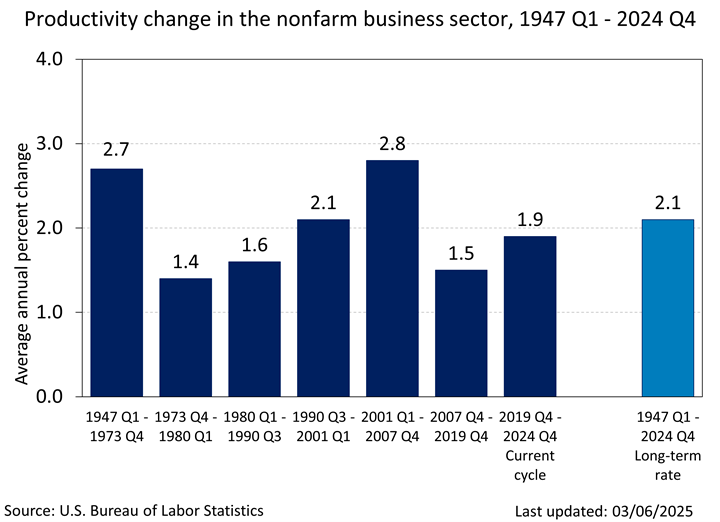
Everyone's going so fast that they keep hitting walls. Review, CI, product asking for things, whatever.
Why have we not seen an improvements in products?
While every post and thread feels like a 90's wall street office, the new android and iphone ship with fewer features than usual. No indie guys come up with a linux-sized alternative OS. Switch 2 remains unhacked. Windows takes 3 seconds to show the right click menu.
Is everyone just running full speed in circles or something?