I have different hypothesis. How I see it democracy have 2 very good feedback loops.
Fast one - the one that used journalism (so called 4th branch of government) that enjoyed public trust and more or less was factual which in turn kept public opinion more or less in one shared and factual reality. This in turn put pressure on actual government in between elections.
And there is second one - slower - public could change government in elections based on the lived experience of last N years.
The monopolies broke 1st loop completely. And the 2nd was hindered. Now ppl cannot choose directionally in slow loop (elections) what is good for their self interest bcs they do not have factual picture of reality. So they can choose based on vibes which in turn is as good as "random move away form current status quo".
IMHO still way better then autocracy.
Case in point - ppl voted for Trump among other things bcs of gasoline prices. How it turned out...
And why right wing - bcs said monopolies put thumb on the scale - as their are capital after all. And they do have more self awareness what is best for their interest. If democracy survives next will move will be ditching current right wing for whatever else and then even monopolies thumb on scale probably will not help current regimes.
Fascinating site. Thanks for linking. However note if you change to "open router" pricing in some cases even B200 which is ~2y old has negative margin (and AFAIK ppl are using longer amortization than 2y - I do not know how cost are calculated here though).
But federal minimum wage is lower in US then in Poland (real value not even PPP) - 31.4PLN/h with ~3.9USD/PLN exchange giving ~8USD/h). Freaking Poland.
And when one comperes wages - PPP should be used. US is really expensive compared to the most of UE. But even then it is not whole picture. For example I can live comfortably with one car in my household. In US I would need 3.
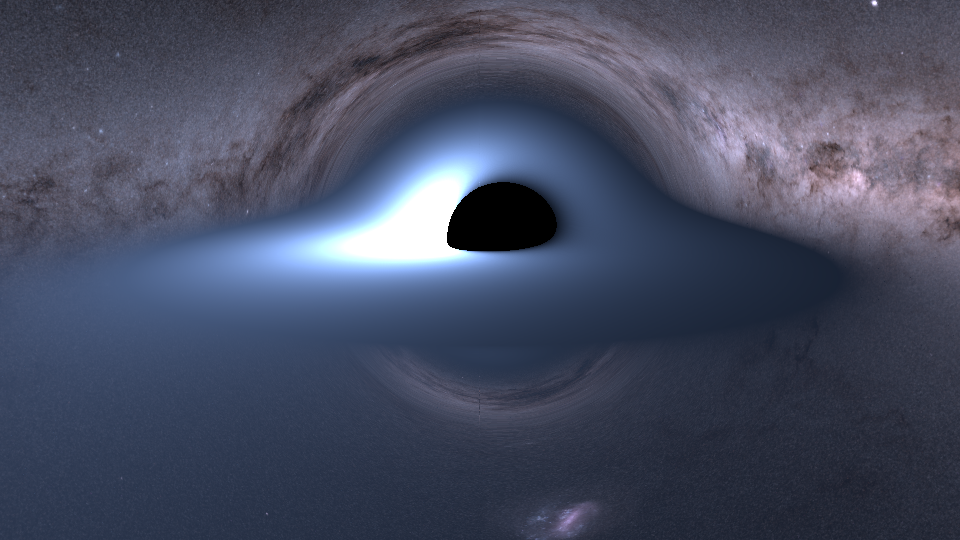
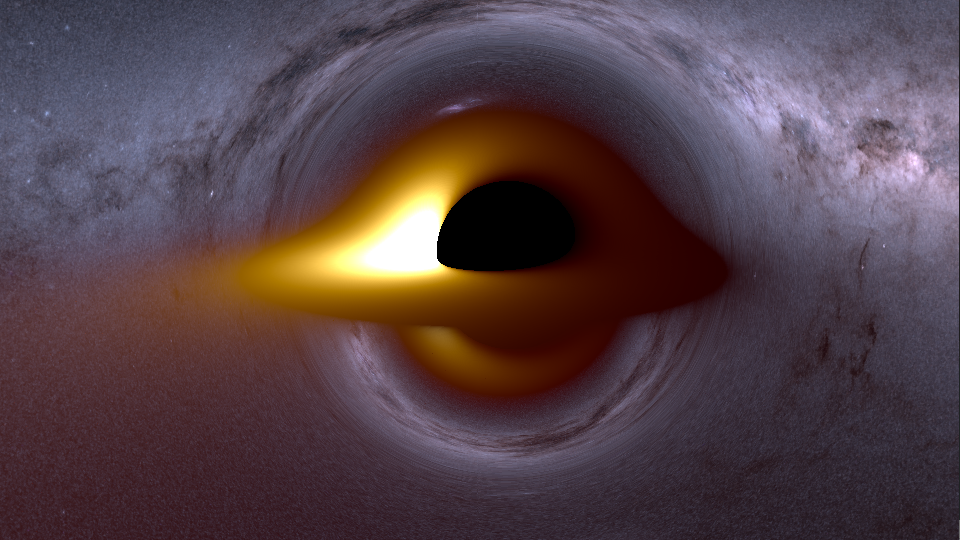
This is a colour and relative brightness accurate example of a hot accretion disk. The size, emissivity and absorption are set to arbitrary parameters, but this is human-eye-colour accurate with correct doppler and radiative transfer for a spinning black hole. Its as correct as I can make a specific model, for what a human would see standing next to a black hole taking into account the limitations of the human visual system
But it requires the disk to be extremely cold, which is physically pretty suspect
One interesting feature is that the temperature and brightness scale differently, so that its actually hard to observe the colour shift, as the brightness changes much faster than the colour. So its not something you ever really see to the human eye
That said these don't do accretion disk within the ISCO, which is a major limitation
It's purely my color map choice – the underlying simulated image is simply a number at each pixel. Transforming that number to the actual displayed color is generally an arbitrary choice, as common for the vast majority of images in astronomy/astrophysics papers. The only difference is that I don't show a numeric colorbar here, for the sake of simplicity.


reply