Why does Luna have a score of 0? I will say that in my limited experience, I use Luna and DSv4 Flash (haven't tried 4.1 yet) and Luna is wayyyy faster. They both output at the same speed but DS has an endless thought process
Holy crap that re-circulation feature is luxurious!
I'd love to have something like that!
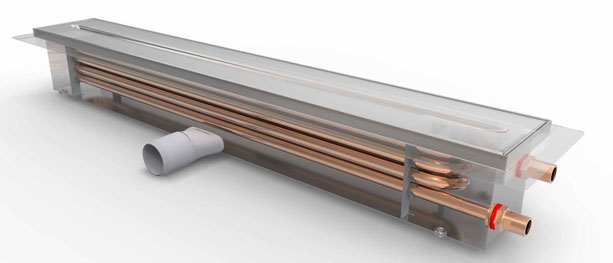
Whenever I take a hot shower I fantasize about putting in a liquid-to-liquid heat exchanger so the hot water can heat up the cold water and you can run the hot water at a much lower temperature.
This application with the bath tub feels way more justified.
That does exist. Simple versions just have a large, deep drain with coils the cold water runs through. Fancier ones have a proper heat exchanger next to the shower (requires a pump) or in the basement. Water sanitation rules probably make it non trivial to get a design certified.
Many people have thought about the drain heat exchanger. However drains need to be way oversized for various reasons and so you can't get good contact with the water: it is mostly air in the drain pipes.
Nice! I like learning about databases but got a bit of "framework fatigue" when I started reading about all the number of dbs available today (and deciphering marketing from tech notes).
This article hooked me with the comparison at the beginning.
I used to scoff at redis' single threaded design but it makes sense in a memory bound db. This article is a great example of taking that high-performance approach and designing parallelization around it. SO COOOL.
Also, it's SO interesting that here's yet another example of how performant the actor model can be. It's an old design (Communicating Sequential Processes was published in 1984!) but it works so well in our current hardware.
From a developer's perspective actors are very easy to reason about. I'm curious to try out Spacetime in a project now. Organizing server logic into databases, sub-databases, tables and reducers is intriguing.
I totally agree. The thing that's drawing me to Spacetime is that it blends the processing model of actors and the data model of relational databases really neatly.
Data comes in, do something with it, store your state in a principled way, repeat. Add in subscriptions to data and it becomes reactive. Simple.
What did you need to write with golang? I found the exact opposite effect when I tested elixir and then went to go.
Exlixir has a great std lib but fewer packages than I'd like in the community. I can't even recall what I wanted!
With go the std lib seems bigger (although very lacking in some data structures) but the third party packages are incredible.
I also find both languages similarly useful since I was mostly interested in sane concurrent primitives in a lang. The OTP is not that useful to me since I haven't had to run these services in anything close to serious but you can (kinda) take the OTP to other languages (they're principles after all).
This is a great follow-up that I don't have a satisfactory answer for, because I can't really recall. I _think_ I was trying to do something with Firebase w/ high parallelism using goroutines. I just remember the feeling of imperativeness when I was iterating through results, etc, and not having a built-in mapping function.
Elixir was totally different -- was just scratching an "intellectual" itch, and it fit my needs like a glove in terms of feeling.
I'm confident that I could learn to like Go, though, lots of people I know rave about it.
> The OTP is not that useful to me
Also agree, didn't really get into OTP even, just enjoyed the style and structure of the language itself!
Not through mpv, but if all of the videos are the same resolution and codec you can use ffmpeg to concat them without needing to re-encode anything.
It could be worth making a little wrapper script for this, but the ffmpeg command itself isn't too crazy. You can Google for "ffmpeg concat multiple videos into a single video without re-encoding".
ffmpeg is super powerful, you can technically resize and alter videos into a consistent format and then encode a new video too.


reply