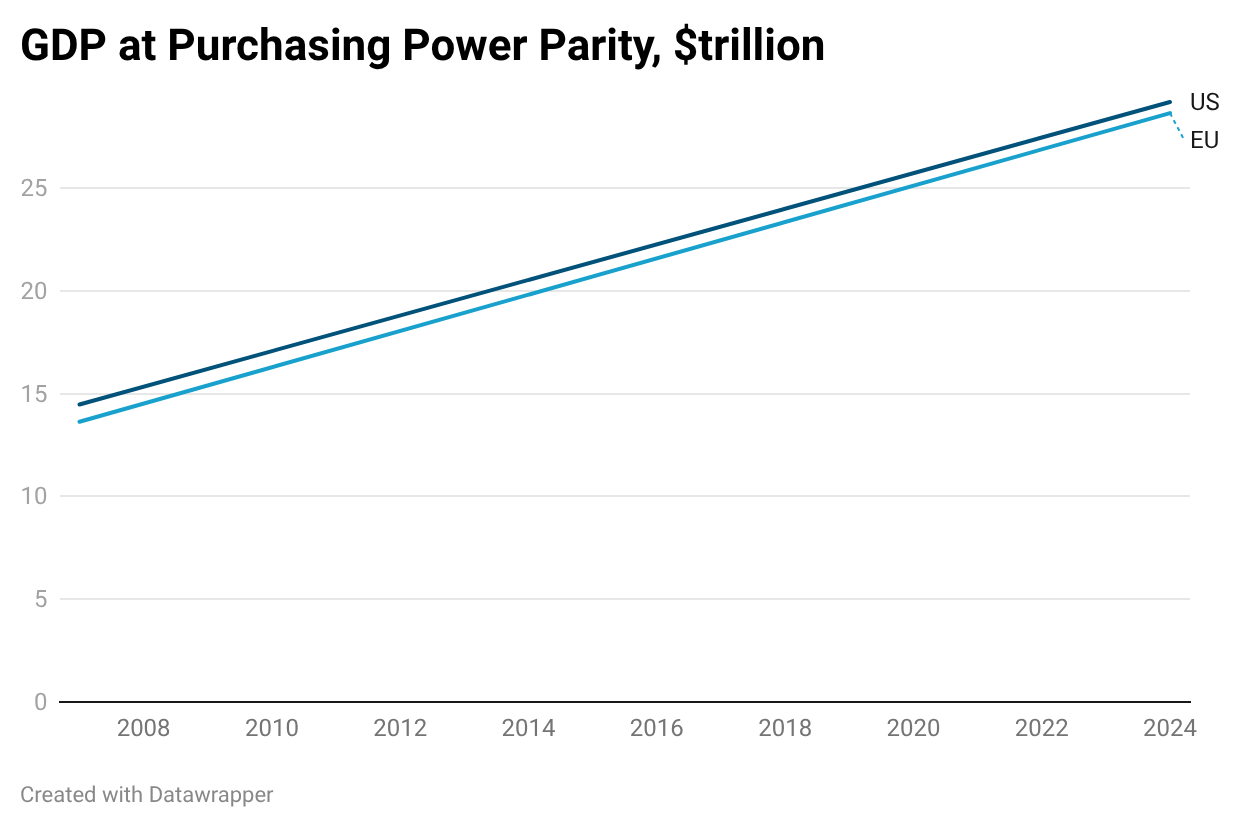
How many years ago was this? Because over the past 20 years things have gotten better
Last time was 15 years ago, though family has been as recent as a few years ago and havent's seen a much of a change change. Also, in many ways, the last 20 years is quite a bad example to pick, since wealth of everyone under the 90th percentile was the same in ~2017-2018 as in ~2007:
The U.S. was growing at the same rate or faster as the UK from 1830 to 1930, when the UK had an empire and the U.S. didn’t. Then, in the second half of the 20th century when the U.S. had an empire and the UK didn’t, the growth rates were more or less the same in both places in the long run trend (ignoring the UK’s step change hit from WWII).
Which side is modern and which is traditional? The examples on the right are clearly more modern than the examples on the left to my eye: the left looks like it's from the '70s while the right is unmistakably 21st century. But the examples on the left are run-down, plain, and feature advertisements and bricked-up windows and steel shutters and security doors, while the examples on the right are brand new and shiny and walkable. There's graffiti in the first example and in the last one they replaced the asphalt with pavers!
Hard to take the conclusions seriously when the authors have their thumbs on the scale.
In a 3d world one can escape from the Earth's gravitational field. On the flat-world equivalent there is no escape. You can checkout but never leave. There ought to be a science fiction story based on this premise.
Things get interesting in 2d flatland.
There the field or force has to decay as 1/r because the circumference of the boundary scales as O(r). But that's the field, to get to the potential you need to integrate and then you get a function that is logarithmic with distance.
A consequence of that is the potential does not drop to zero as you go further away. Unlike what is the case for the 3d case.
If you have heard that about a random-walking bird that returns infinitely often but a random-flying bird one that doesn't, that's sorta related.
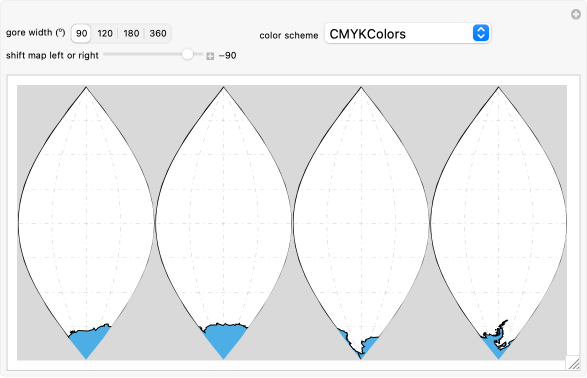
Totally unrelated, was quite thrilled to see this map of the sphere
because I had been entertaining myself by making toy globes out of paper and it seems this polyconic map was the one I had used (an interrupted version of this).
The more conventional way is to use gores using interrupted sinusoidal that look like a string of lobes connected at their common equatorial hip.
"deep ties to everyone in the doomer media campaign"
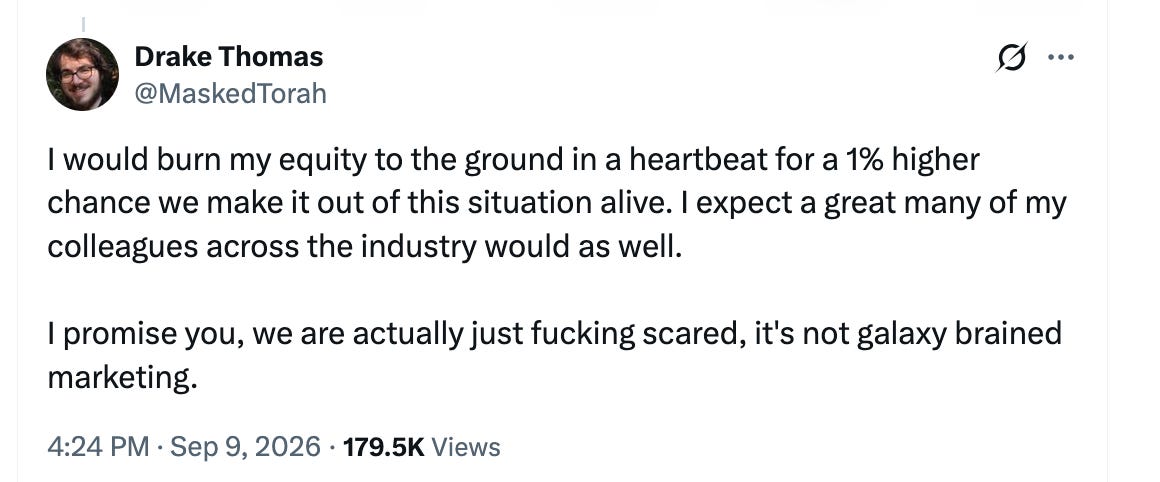
Are you suggesting these external NGOs were spun up as part of a gigantic pre-IPO hype stunt? METR was founded multiple years ago. This "stunt" is getting quite elaborate.
At a certain point, Occam's Razor says: These engineers are legitimately worried. They haven't invested years in a bizarre reverse psychology campaign to convince the public that their product is dangerous in order to make more money.
This feels like Claude thought to me—assertions and comparisons that look impressive on the surface, but kind of make me scratch my head the more I think about them.
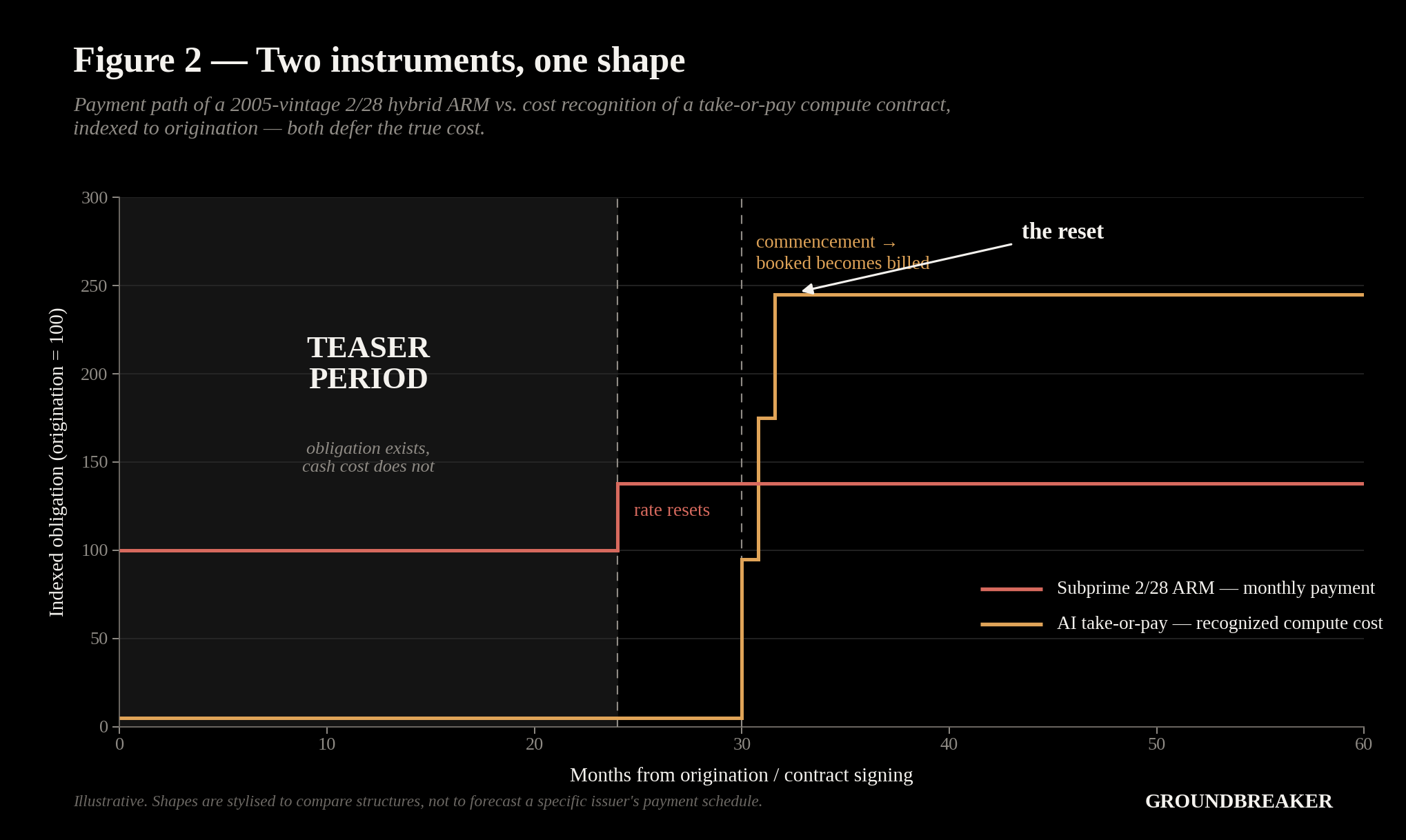
I think what made me throw in the towel was “Figure 2 — Two Instruments, One Shape” [0]. That chart comparing when contracts reset. Weirdly consistent norms! [looks at the sourcing] Oh… it’s… not from data at all… it’s just notional…
Is there anything here other than “the people financing the factory are betting that it’ll be able to sell what it makes once it’s built”?
I mean… isn’t “an instrument that splits time in two” kind of… what capital financing is? And this risk is what earns investors their interest, and the rest of the financial system involves different ways for people to calibrate their bets on the risk materializing?
Including derivative instruments that allow investors to smear out the point-in-time “cliffs” this writer is concerned about? If you think the revenue is never going to come, you can bet on that now. Or go into the distressed datacenter acquisition business to prepare! Conversely if Payment Day comes and you think they just need a couple more months, you can adjust the loan or make them a new loan to cover those first few months’ payments, etc., right? Since both parties stand to lose if it blows up completely, unless it’d be worth more to sell to somebody else?
These are also not individual homeowners’ “investments.” The risk is coordinated, and it’s big, but we know that already, right? Yes we know the revenue, yes it’s different from the costs of paying down their capital investments, yes both are reported on the financial disclosures.
How is the claim here any stronger than “all this depends on them actually being able to sell this crap once they get it built”?
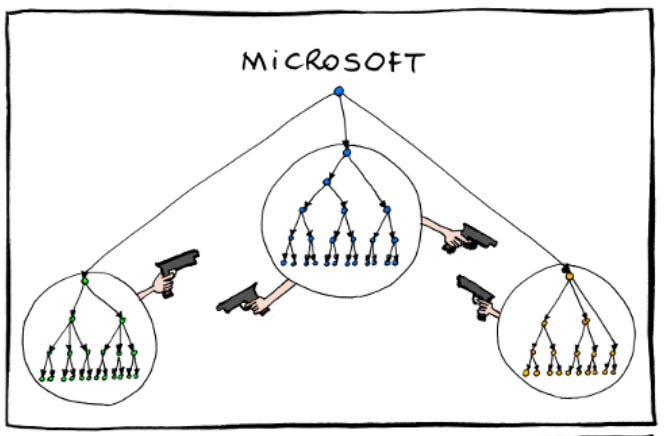
Right, that was the Ballmer era, and when pg pronounced them dead. But I do think that perspective didn't appreciate the coporate Game of Thrones (https://substackcdn.com/image/fetch/$s_!Vk-D!,f_auto,q_auto:...) Ballmer had to play to pave the way for Satya to remake Microsoft from a Windows + Office company to an Azure + Windows + Office company.






(Ill note that this design studio is being led by newly proud white nationalist Joe gebbia who apparently blames illegal aliens and their ‘anchor babies’ for high housing costs apparently while unironically forgetting he cofounded airbnb: https://substackcdn.com/image/fetch/$s_!VCGY!,w_1272,c_limit... - I mean look at these posts back to back, I wonder why they’re unable to recruit anyone: https://substackcdn.com/image/fetch/$s_!ArmA!,w_1272,c_limit...)